7.4. Relativity of Meaning

Deconstruction is the most modern term in the construction foursome. The term is derived from the world of linguistics and originally had to do with textual interpretation. However, according to Christopher NORRIS (1982/ 1991), ‘to present ‘deconstruction’ as if it were a method, a system or a settled body of ideas would be to falsify its nature and lay oneself open to charges of reductive misunderstanding’.

The French philosopher Jacques Derrida (1930 – 2004) coined the term ‘deconstruction’ when he pointed to the systematic incoherence within a text. The argument focused on the instability in any text (or viewpoint) which uses contrastive or structural features to manifest itself. The criticism (of ‘post structuralism’) comes down – in a quadralectic view – to an acknowledgement that the ‘objectivity’ of the ‘Third Quadrant’ (as derived from dualistic thinking) is highly arbitrary. The (newly discovered) dynamic component inhibits, or at least greatly delimits, its function as a stable and authoritative reference point. Consequently, a ‘thing’ (anything) has to be placed between brackets. Deconstruction is, in a nutshell, the art of bracketing. Nothing is what it seems.

Derrida and his followers further realized that the (dynamic) ‘thing’ in the ‘Third Quadrant’ could not stand on its own. The process of a reversal of polarities should be included as a stage within the ‘Fourth Quadrant’: ‘the movements of deconstruction do not destroy structures from the outside. They are not possible and effective, nor can they accurate aim, except by inhabiting those structures.’ (Jacques Derrida in: Edmund Husserl’s ‘Origin of Geometry’: An Introduction; 1962/1978; p. 24/39).

A system (or structure) can be seen as a ‘Third Quadrant’ construct, built around a central idea that holds the whole thing in place (as a ‘Second Quadrant’ reconstruction). This pivotal idea – like the idea of binary opposites – can be flawed or even an illusion (as seen in a ‘Fourth Quadrant’ deconstruction), but can still be used as a workable option. Derrida and Levi-Strauss employed the term ‘bricolage’ to describe the process in which the unstable ingredients of a system are used ‘as if’ they were stable. A ‘bricoleur’ is somebody who doesn’t care about the purity of a system, but is more interested in its usefulness. The ‘bits and pieces’ in a communication invite an observer to play rather than to worry about their coherence.

Deconstruction seeks to undo both a given order of priorities and the very system of conceptual opposition that makes that order possible (NORRIS, 1982/1991; p. 31). Communication becomes, in this process, a game with certain accepted rules and subjective players. James S. HANS – in his book ‘The Play of the World’ (1981) – placed the capability of ‘play’ in the centre of attention. This term (introduced by Derrida) points to a ‘shaking of the system’ by attacking certain assumptions, which are based on a valuation by means of unstable oppositional binaries.

James Hans followed the French philosophers Gilles DELEUZE and Felix GUATTARI (1972; 1980 – both books are not recommended as light reading – in their ‘production’ approach (as a variant of ‘construction’). Play is, in their view, a triple phenomenon in which production, consumption, and enregisterment are part of the same process. Their socially inspired vision, riddled with an ‘extraordinary profusion of new notions and surprise concepts’ (like rhizomes, (thousand) plateaus, desiring machines and planes of consistency) will not be followed here, but the ‘play’ aspect – as a Fourth Quadrant characteristic – is worth noticing.

The loathsome term ‘post structuralism’ is sometimes used with respect to Derrida’s ‘structuralism from a phenomenological perspective’ (or, as we would say now: a view from the Fourth Quadrant towards a structure in the Third Quadrant). Indeed, those views do exist, and they might be ‘modern’ or even ‘post-modern’. These temporal (and linear) classifications do not enhance a better understanding if they are used in lower division thinking. Their meaning becomes, on the other hand, comprehensible if they are placed in a quadralectic setting.

Communication is primary about a shift in a division environment. All other (secondary) features, like demarcation, structural setting and perspective only make sense after that primal condition has been fulfilled. Every ‘-ism’ is, at best, a point of view, but it does not reach to the heart of the matter. There is no reason to regard ‘post structuralism’ (in a post-modern setting) as the pinnacle of human understanding at present. It would be better to see this cerebral ability to take a distance from certain views in philosophy (and linguistics) as the result of a wider (division) frame of mind.

Higher division thinking makes it possible to determine positions in a communication more accurately.

The term ‘deconstruction’, used in a Derridean sense, does not have a satisfactory sound. The neologism, as a composition of destruction and construction, has a ring of oppositional thinking, which is the very state of mind it will surpass. The negative meaning of the phenomenological critique (as ‘destruction’) was already noted by Martin Heidegger in his lecture courses on the ‘Basic Problems of Phenomenology’ (WS 1919-1920) (KISIEL, 1993; p. 61).

The nature of phenomenology has probably more to do with the ‘seeing of seeing’. ‘Phenomenology aims to think ‘the matters themselves’, and even more emphatically, to encounter them in their originality’ (p. 177). This latter typification is more sympathetic (then the idea of destruction), and probably more to the point. Deconstruction is supposed to lead to wider horizons. And Paul de Man’s comment that ‘no other word states so economically the impossibility to evaluate positively or negatively the inescapable evaluation it implies’ might hold, for the moment (de MAN, 1979; Preface, X).

The exceptio – as the fourth stage in the handling of a relic – indicates the delivery of the relic at its designated place of worshiping. It seems like an end station in a development, but that is not the right view. The putting into place is rather a beginning. The interaction between the relic and the worshiper has now found its right setting, after the previous stages of preparation, and can take off in earnest. Attention is impossible if we have not found a position (to let things happen) and create a distance (to measure the shift in a division). The exceptio is crucial, because it is here that the knowledge of the unknown becomes accessible.

7.5. The Four-fold Man

Our present philosophical position might be described – as Kenneth Kierans did in his article – as ‘beyond deconstruction’ (KIERANS, 1997). He pointed to the critical reaction on the philosophical thoughts of Jacques Derrida and Paul de Man by writers such as David LEHMAN (1991) and Geoffrey HARTMAN (1980; 1991), mainly on the grounds of the arbitrariness of their chosen subjects. ‘Deconstruction, it is argued, stands outside of reason and affirms only an endless, undisciplined, even wild freedom of commentary’ (LEHMAN, 1991). The (literary) critic is certain of himself alone and determined to undermine every specific claim of truth within the text.

This critique of ‘arbitrariness’ is severe on any pioneer in a given (scientific) field. The possibility of subjective choices is pack and parcel of any road to discovery, and not only the deconstructive one. Kierans pointed also to ‘a rediscovery of traditional philosophical ideas, and a reaffirmation of their truth, even if in one respect in a distorted way.’ In particular Hegel’s opinion that ideas are not external things, but are built in the concept itself, is part of that rediscovery. The quadralectic view of a subdivision of the Second Quadrant (as the birthplace of the ‘idea’) into the stages of the main (four-fold) division reflects this same vision.

‘Beyond deconstruction’ must not get stuck in the specific characteristics of intuition, consciousness, and/or the nature of ‘ideas’, but has to focus on the arbitrariness of the division itself. There is no point in attacking dualistic (or oppositional) thinking, which seemed to be the backbone of the deconstruction method. Paul de Man – in his pioneering book ‘Allegories of Reading’ (1979) – was doing just that: breaking the figural language of Rousseau, Nietzsche, Rilke and Proust into pieces that fit into a theory of reading. This theory found its inspiration in the (classical) rhetorics.

De Man (1979) pointed to Nietzsche and his outlines for a ‘Course on Rhetoric’ (given in the winter semester 1872-73, with no more than two students present). The German philosopher made a distinction between rhetorics as a system of tropes and one based on the skills of persuasion (Beredsamkeit). The two variables represent different points of view: ‘Considered as persuasion, rhetoric is performative but when considered as a system of tropes, it deconstructs its own performance’ (p. 131).

The tropos (as figures of speech) and the persuasion represent, in a quadralectic view, the ‘objectivity’ of division and the ‘subjectivity’ of movement in a communication. The basic dualistic entities exist together, and at the same time. Therefore, the ‘escape’ in rhetorics can only be partially (in words on a technical level) and temporary (in things on an interpretative level). The cross-shaped reversal of properties – known to rhetoricians as chiasmus – does not offer a solution either (to the ultimate problem of unity in a communication).

The name chiasmus is derived from the Greek letter chi (x) and indicates a ‘criss-cross’ arrangement of terms. The attributes of word and things can be reversed as a figure of speech to enrich a communication. The figure was common in eighteenth-century English poetry and a determining figure in the verses of Rainer Maria Rilke (1875 – 1926).

The expression is a powerful oratorical tool. The American President John F. Kennedy (1917 – 1963) used the chiasmus as a rhetorical device in his well-known: ‘Ask not what your country can do for you, ask what you can do for your country’. The parallel structure and the inversion are a reminder of the creation of the quadralectic CF-graph. This graph was the result of a shift between two four divisions and included an inversion of directions. The actual power of a chiastic expression might find its very origin in this resemblance, combined with the force of a ‘double’ dialectic.

Quadralectic thinking can be ‘deconstructed’ too. The description of the quadrants – in terms of a certain kind of visibility – is a generalization of the multitude of CF-values in a given quadrant. This aspect is strikingly evident in the Third Quadrant, which constitutes for the majority of CF-values above the visibility boundary (CF = 11) and is still characterized as the area of maximum (visible) visibility. It points, on the one hand, to the most ‘material’ side of a communication, but this physical appearance is, on the other hand, the least visible. The ‘meaning’ of CF-values – other than as an indication of distance between communication partners – can always be questioned (including the definition of visible visibility itself).

The actual arithmetical procedure, which led to the formation of the CF-graph, cannot be deconstructed. All directions of the shift (between the divisions) and the valuation thereof are incorporated in a formal mathematical process. Its logic outcome is ‘immune’ for further questioning. The ‘language’ of mathematics (with its roots in the First Quadrant) overrules here the ‘language’ of deconstruction (with its home ground in the Fourth Quadrant). The mathematical mind can see the infinity of the invisible (as indivisibility), while deconstructional reasoning always needs the visible to express itself (in a division environment).

Quadralectic thinking agrees with Husserl’s idea of a discrepancy between an original intuition (set in a First Quadrant, characterized by the perception of a ‘preliminary presence’) and the intentions of consciousness (running its course through the other quadrants). His conclusion that there can be no reconciliation between our intuition and the free act of consciousness will not be followed. There is no real rift between the First and Second Quadrant. Intuition can cross into the other quadrants, and consciousness is not excluded from the First Quadrant. The only possible gap in quadralectic thinking might be found between the proposed Fourth and the following First Quadrant. The infinite depth (or the Abyss) is created in a projection of oppositional thinking on a cyclic four-division.

The biological idea of an operational effectiveness in our interaction with the world has to be included in a quadralectic vision. Humberto Maturana pioneered this particular type of ‘system thinking’. He focused on a model of cognition that explains knowledge as the product of a closed circuit of internal operations (von GLASERSFELD, 1997).

Maturana’s approach sounds like a faint echo of Vico’s verum-factum theory (p. 53/54), in which the act of a personal creation (making in order to know) had a central place. The acting subject’s experiential world provides its own reality. It is clear, that the long cherished ‘objectivity’ gets dented in this process and can better be put, in good deconstructionist’s fashion, between brackets. Humberto Maturana drew the consequences of this view (in an interview in 1985):

‘When one puts objectivity in parenthesis, all views, all verses in the multiverse are equally valid. Understanding this, you lose the passion for changing the other. One of the results is that you look apathetic to people. Now, those who do not live with objectivity in parentheses have a passion for changing the other. So they have this passion and you do not. (-) However, if the others also put objectivity in parentheses, you discover that disagreements can only be solved by entering a domain of co-inspiration, in which things are done together because the participants want to do them. With objectivity in parentheses, it is easy to do things together because one is not denying the other in the process of doing them.’

‘Constructivism’ or ‘co-inspiration’ can replace the confusing dualistic term of ‘objectivity’. These substitutes suggest a wider division environment, which includes – in its most complete form – all the stages of construction as given in the last chapter. Even then, one has to be more precise (then the pragmatists and the constructivists) in the actual valuation of the terms ‘functioning’ and ‘effectiveness’. The ability to play is encouraged, but someone has to know the rules. Even if the source of relativistic knowledge originates in the observer-self, then there is still a need for a measurement of its flow (if visibility will ever becomes meaningful). How do we measure effectiveness?

The answer can be found in the quadralectic feature of the communication graph. This graph follows the position of an observer in terms of intensio (approach) and remissio (alienation). A certain point (of view) – in the communication and on the graph – is expressed as a number (CF-value), which indicates the ‘effectiveness’ of an observer to interact.

The actual ‘progress’ of quadralectic thinking over such ‘Fourth Quadrant’ products as phenomenology, deconstruction and constructivism is experienced in the very presence of an arithmetical measuring system, which keeps the relativistic forces at bay. The skeptical mind – as yet another classical product of Fourth Quadrant thinking – meets with its last point of reference in the knowledge of scale, setting the rules for the interaction.

The introduction of das Geviert (the four-fold), in the later works of Martin Heidegger (Vorträge und Aufsätze, 1954), pointed to the interplay of heaven and earth, the holy and the mortal. He saw these four entities as the main constituencies in the creation of space and Being. His visualization of the four-fold, as a meeting place for man and nature, is a strong reminder to the picture of the ‘art of dying’ in Girolamo Savonarola’s book ‘Predica dell’arte del bene morire’ (fig. 93). This woodcut – shaped at the Pivotal Point of the European cultural history (1500) – has exactly the components, which Heidegger saw as the ‘world’ (das bauende Hervorbringen).

VOFN093

Fig. 93 – A representation of the ‘Art of Dying’ in Savonarola’s book ‘Predica dell’arte del bene morire’ (Florence, 1504). The two-division of life and death is superimposed on a four-division of heaven and earth. These elements resurfaced in the later works of the German philosopher Martin Heidegger (1889 – 1976) and his ideas of ‘das Geviert’ (the four-fold).

The oppositional pairs of heaven-earth and holy-mortal represent the basic qualities of any communication in place and time (being the operational disguises as division and movement).

Heidegger’s Geviert has, although covered in a blanket of hard-to-under-stand terms (‘penetrating the thickets of Heidegger’s terminological jungle’), a strong analogy with Savonarola’s early sixteenth century ‘art of dying’. Both renderings try to construct, despite a time gap of four hundred and fifty years, a ‘monument of life’, which can surpass the human black-and-white setting of life and death.

The composition of (four) quadrants in Savonarola’s representation invites the observer to a broader picture of reality-itself:

  1. God sits in heaven, in a circle of clouds. The blessing figure, surrounded by nine angels (the muses?) amidst stars, is framed in a mandorla with four angels. This holy place bears all the characteristics of the First Quadrant, the invisible invisibility of the quadralectic mind.
  1. The holy circle shines its light into a rather empty sky. Only two angels populate this part of the picture, floating on a cloud. Their gestures indicate an invitation to the mortals below. The symmetry of the figures is probably a reference to the First Division, in this case a two-division. They form, together with God in heaven, a trinity in quasu (up there, in heaven). The invisible visibility of the division-environment is characteristic for the Second Quadrant.
  1. The dualism of Life and Death reaches its zenith in the world of the mortal. The richly dressed nobleman, with his purse strapped to his belt, has an encounter with Death. The man tries to plea his innocence, but death is merciless pointing to heaven. It is time to leave the quagui. Two devils are ready to assist the departure of this earth. They form, together with the mortal and the death, a curious quaternity in quagiu (down there, on earth/underworld). The visible visibility of the Third Quadrant is a place of limitations.
  1. The sad cry of victory by a troubled Lucifer, roaring in the half-circle of the earth, represents the opposite face (of power) in the lower quarter of the picture. Four devils surround the Devil, while he is crushing two unlucky mortals. It seems as if there is no mercy in this place of darkness. A comparison with the visible invisibility of the quadralectic Fourth Quadrant might be appropriate here (a quantity), but it should be noted, that the emphasis is on the oppositional aspects.

This is the place to draw the final conclusions of the quadralectic approach. We have seen its dispositio, the arrangement of the revived four-fold way of thinking. The theoretical part (pp. 90 – 117) launched a shift between two four-divisions. The calculations ended, after the elimination of hierarchy and direction, in a value-system based on a virtual distance between the communication partners. Then, with the preliminary result of the theoretical reconstruction at hand, it was possible to build a new observation point. Past and future could be seen in a broader sense, in which objectivity and subjectivity participate at the same time (or were both absent). The European history showed a familiar trend along different types of division thinking, just like other cultures (like the Egyptian, Greek or Roman civilizations) had done before. And the position in the present begot a new meaning and held the promise of more.

Our existence as a human being – in a magical Observational Present (OP) – is a matter of visibility, not only by ourselves, but also by the world as a whole and even the universe. That visibility is the result of a static division, and a dynamic movement derived from the same metaphysical stock as place and time. Our presence in life will greatly benefit from the understanding of observation by determining the forces, of which it constitutes.

The quadralectic approach is just one possibility, but with a versatile profile: not too few and not too many. And it is also a system in equilibrium: the (oppositional) forces are kept at bay and power is neutralized. Furthermore, it is a peaceful system as well, aiming at the possible understanding between man. Creating a personal identity should not be destructive for someone else.

The quadralectic vision has witnessed the birth of the Asymptotic Man. Every visibility (or invisibility) is the result of the choice of a certain static division and an arbitrary point of reference in a dynamic environment. The position in a self-selected present can be visualized on an asymptotic graph. The horizontal axis gives the length of communication (as part of a division, which determines a temporal-objective place) and a vertical axis marks the beginning of communication (as part of a movement, which provides the topical-subjective time).

We know now where we are and have the means to pinpoint our position. What remains (after the position is fixed) is a further increase in the knowledge of scale. The appropriate parameters are changing all the time: distances seem to come near, and the present is running away from us. The action can be the other way around, when near is far and the moment is now. A modern observer knows that the actual direction is not important, but the intensity of the experience is.

The wisdom and truth of the Asymptotic Man, floating through the apparent opposition of the quasu and quagiu, is recapitulated in the knowledge that only the comparison in a proper division environment will hold the key to life. For that very reason, we have to travel on, looking for new experiences to calibrate the scale of our thinking. In the end, which is not really an end, there is that great feeling of understanding the scale of things and knowing our humble place as an observer.

This book will end with four lines from the poem ‘Jerusalem’ (1804/1818) by William Blake (1757 – 1827). The British poet, engraver and visionary mystic composed the work from 1804 onwards, but the first complete copy only appeared in 1820. The work consists of four parts (addressed to different audiences – the Public, the Jews, the Deists, and the Christians) and comprises one hundred plates. There are only six known copies of the poem, of which one is colored.

Blake’s Four-fold Man is, in his view, a man in his complete or unfallen state, when he is identical with God. All the four main faculties (the so-called ‘Zoas’) are functioning in an optimal way. ‘Emanation’ is the female representation of Nature, seen as a field of human creation. ‘Spectre’ points to the withdrawn subjective mind. ‘Shadow’ is the objective counterpart of the Spectre.

I see the Four-fold Man, The Humanity in deadly sleep

And its fallen Emanation, The Spectre and its cruel Shadow.

I see the Past, Present and Future existing all at once

Before me. O Divine Spirit, sustain me on thy wings.

8. Glossary (of quadralectic and related terms)

Analogy method is a way of reasoning, which provides, by contrasting specific elements within an interchange, a new outlook on the indivi-dual members of the comparison. The method is positioned in the Fourth Quadrant of the quadralectic way of thinking.

Apex thinking refers to subjective experiences born in an environment of oppositional (or lower) division thinking.

Approach Point (AP) marks the position on the CF-graph where the CF-values drop for the first time below the value of CF = 11. This point lies at the end of the second subdivision of the Second Quadrant. The AP is fixed at 3/8th part of the quadralectic cycle V and at 1/10th part of the visible visibility area (X).

A priori is reasoning from general propositions to particular conclusions.

A priori principle indicates the structure of a division, which is given at a certain point in an interchange of information and can subsequently be reconstructed throughout that communication.

Attitude model is the cognitive framework, put together in the Second Quadrant, to understand the visible visibility of the Third Quadrant.

Basic unit (BU) is a subdivision of the communication cycle (V) with a length of 1/16th V.

Basic unit (BU) is the length of the communication graph between two inflection points.

Belief is the visualization of the invisible in the First Quadrant.

Binary or two-valued. A binary relation states how two kinds of elements are linked, excluding all division (thinking) higher than two.

CF-value is the value of the communication factor (CF) at a certain position in the communication.

CF-sequence consists of sixteen CF-values, which cover the full length of the communication trajectory (CT).

Closed Period (CP) is the historic visibility period of a Part, with a visible visibility area (X) situated in the past.

Commensurability is a common measure between like quantities. It is seen as a rational number expressing the ratio between quantities. Incommensurability is expressed by an irrational number.

Communication (1) is a continuous process of exchange of information between autonomous parts.

Communication (2) is the interaction between comparable subdivisions, which are distinguished within a unity.

Communication (3) is the dynamic relation between units, which are visible in the universe by division.

Communication coefficient (CC) is a measure for the shift, which occurs at a given segment of the communication trajectory. The CC-value can be calculated by taking the sum-total of the shift values within a given grouping combination of ranking orders.

Communication factor (CF) is the sum of the communication coefficients (CC’s) measured over the communication trajectory.

Communication factor (CF) is a number, which indicates, in a cyclic setting, the distance between the communication partners. Low values mark an approach (intensio) towards each other, while high values signify an alienation (remissio).

Communication Trajectory (CT) is that part of the communication cycle where the shift values between two revolving four-divisions is measured. The width of the trajectory is limited by the smallest part (SP or Minor) which participates in the communication.

Compartment is the spatial realm of a divided unity.

Convergence is the diminishing of CF-values over a trajectory, indicating an approach of the communication partners.

Cosmology is a study of the origin and nature of the world.

Deductive method of reasoning implies the gathering of data in a multiplicity and moulds them together into a unity. The method is, in a quadralectic interpretation, positioned in the Third Quadrant.

Dialectics (1) is a form of communication based on the two-division.

Dialectics (2) is a form of practical logic were the interchange of information takes place between two components.

Dialectics (3) is a philosophical way of reasoning in which the dynamic use of a proposition (thesis), a contrast (antithese) and an integration (synthesis) lead to a new understanding.

Disclosure model is the cognitive framework, put together in the Second Quadrant, to understand the invisible invisibility of the First Quadrant.

Displacement series consists of four communication coefficients (CC) derived from a complete internal shift within a grouping of ranking orders.

Divergence is the increase of CF-values over a trajectory, indicating a retreat of the communication partners.

Division is the act of creating parts or compartments in a unity. The division is always an arbitrary action undertaken by an observer.

Elevatio is the second stage in the handling of a relic, meaning the exhumation of the body or remains and the storage in a shrine. In a wider (quadralectic) sense, it can be compared with the cognitive action in the (second part of the) Second Quadrant (II, 2), which result in the first ‘visible’ visibility (in the third part of this quadrant (II, 3).

Emotionality is the capacity to have an insight in the visible invisibility of the Fourth Quadrant, governed by the laws of higher division thinking.

Entelechy is the inner nature of a thing, which determines its development.

Entelechia (or causes) are the four types of actions, as defined by Aristotle, to complete a communication. The intentions of the final, formal, material and efficient cause correspond with the types of visibility in the successive quadralectic quadrants.

Ethics is – in an oppositional context – the study of right and wrong in conduct, but must – in from a quadralectic point of view – be seen as the best-possible valuation of the communication process.

Exceptio is the fourth stage in the handling of a relic, indicating the delivery of the relic at its designated place of worshiping. It points, in a wider (quadralectic) sense, to the practical and subjective use of certain (accepted) limitations, which takes place in the Fourth Quadrant of a communication.

Feelings are used in an observation form of the Fourth Quadrant, whereby an observer can recognize certain outlines in the visible invisibility and experience them as psychological notions.

First Major Approach (FMA) is characterized by the lowest CF-value on the CF-graph (CF = 6) at the end of the third subdivision in the Second Quadrant (II, 3). The FMA has the greatest intensio, which means that the maximum visible result of the communication will be gained at this particular point. All the potential possibilities of the communication become apparent at this point.

First Quadrant (I) indicates the first division area in a quadralectic universe, which is characterized by a total absence of an empirical notion (invisible invisibility).

First Standard Sequence (FSS) is a series of CF-values, which gives the distance between partners in a four division, calculated over the communication trajectory (limited by the Smallest Part). The interchange is valued by the CC-sequence (0 6 8 6) and is independent of the direction in which the divisional parts move along each other.

First Visibility (FV) is defined a distinction in time and place when a (measurable) recognition takes place between the communication partners. The event takes place at the beginning of the second subdivision of the Second Quadrant (II, 2), when the critical value of CF = 11 is reached. The FV is located at 5/16th part of the full communication cycle V.

First Visibility Crisis (FVC) is situated at the end of the first subdivision in the Third Quadrant (III, 1) where the CF-value (CF = 13) reaches for the first times its greatest remissio. This process causes tension within the communication and results in a psychological confusion or ‘identity crisis’ between the partners.

Fourth Quadrant (IV) is the fourth division area in a quadralectic universe, which is characterized by an excess of material presence leading to new forms of invisibility (visible invisibility).

Inductive method of reasoning implies the comparison of a chosen unity with data in a multitude and reach for a new conclusion. The method is positioned in the Second Quadrant.

Inflection point is a marker on the CF-graph indicating a Basic Unit (BU). It is not necessary, like in differential calculus, that the curve (graph) changes sign. There are eight ‘real’ inflection points in the CF-graph if the rule of change is applied: three in the First and Third Quadrant and one in the Second and Fourth Quadrant.

Intensio is the expression for an approaching movement between the part-ners in a communication. The internal shift between the four-divisions produces lower values.

Intellectual relevanceis the insight and comprehension of the invisible invisibility of the First Quadrant.

Interpretation model is the cognitive framework to understand the invisible visibility of the Second Quadrant. It is put together in the Second Quadrant.

Intuition is an observation form of the First Quadrant, whereby an observer is unable to see any distinction, due to an absence of boundaries, but is still able to use this nothingness.

Inventio is the first stage in the handling of a relic, pointing to the discovery of the body or remains. In the rhetoric literature, it is the expression for the initial stage of a conversation when a speaker determines the possible reactions of the spoken words in a continuous interaction with the audience.

Invisibility area (O) of a communication cycle is, for one part (O¹), situated in the First Quadrant (I) and the first quarter of the Second Quadrant (II, 1) of the communication cycle and, for another part (O²), in the last quarter of the Fourth Quadrant (IV, 4).

Language (1) uses the meaningful elements of signal, symbol and sign to transfer them in a comprehensive way to other observers. The language is, in a quadralectic view, the face of the Fourth Quadrant (IV).

Language (2) is the development of an intellectual interaction based on a form of division thinking.

Large Visible Animals (LVA) are animals that can be observed by a human being without the help of artificial equipment to enhance visibility.

Last Visibility (LV) is the antagonist of the First Visibility (FV) and situated at the very end of the visibility area X, where the CF-value 11 is reached for the last time. It signifies the final notion of (measurable) recognition between the communication partners. The LV is located at 15/16th part of the full communication cycle V.

Magic is a form of cerebral experience, using the reflective constructions of the Second Quadrant as a measure of understanding.

Material is the manifestation of the visible visibility in the Third Quadrant, governed by the laws of oppositional thinking.

Metaphysical model is the cognitive framework, put together in the Second Quadrant, to understand the visible invisibility of the Fourth Quadrant.

Metaphysics (1) is the indication for the opposite of physics.

Metaphysics (2) is the inquiry into the ultimate and fundamental reality.

Model is a cognitive construction, based on ideas and built in the Second Quadrant, in order to provide the observer with a framework to understand the reality.

Muun (1) is a symbolic unity in multiplicity.

Muun (2) is the unison to express the multitude of interpretation, which is possible in the Second Quadrant, after a structural cadre for the visibility has been formed.

Muun-length (V) indicates a full cycle on the universal communication trajectory (CT) and is determined by the Smallest Part (SP) which partakes in the communication.

Myth is a form of communication, which find its inspiration in the invisible invisibility of the First Quadrant. It is based on psychic manifestation in a timeless time and directed towards the soul.

Notion is the conception and subsequent image of certain limitations within a communication.

Observer is the creative entity, who can distinguish the position of a communication partner by a definition of the division environment and a communication trajectory.

Observation is the act of gathering information from reality.

Observational Present (OP) is the position of a human observer on the communication graph V at the very moment when the basic choices in the interaction take place.

Ontology (1) is a study of the ultimate nature of things.

Ontology (2) is a study of the way in which the Third Quadrant fits into the communication cycle.

Paradigm (1) is a set of accepted scientific beliefs.

Paradigm (2) is a theory or dogma that establishes boundaries and regulations.

Part is a compartment of the universe, bounded by the markers of an arbitrary division and subject to the laws of the universe.

Pivotal Point (PP) is situated in the middle of the visible visibility area X and also in the middle of the Third Quadrant (III). The oppositional character is consciously felt since the CF-value is 10, i.e. under the visibility boundary of 11.

Point of recognition (POR) is a reference point in an exchange of information. Its location is established by an observer in a process of comparison between the visibility in a particular situation and a similar representation on the universal communication graph. Its definition determines the communication-as-a-whole.

Quadralectics is a communication based on the division factor four (4), which originates in the conscious four division of space and reality.

Quadrant is an independent part of the primary communication cycle.

Quaternary means four-valued. A quaternary relation indicates how four kinds of elements are linked.

Reality (1) is an observation form of the Third Quadrant, whereby an observer can identify a certain distinction in the visible visibility.

Reality (2) is a form of understanding, using the empirical notions of the Third Quadrant as a measure of understanding.

Receding point (RP) marks the start of a period of equilibrium (CF = 11) at the beginning of the third subdivision of the Fourth Quadrant. The RP is fixed at 7/8th part of the quadralectic communication cycle V and at 9/10th of the visibility area X.

Remissio indicates a receding movement (divergence) between the partners in a communication, which is characterised by higher (CF) values.

Relic is the remains of or a trace related to a holy person, which is used as a remembrance and object of worship. The four (mediaeval) stages in the process of conservation are seen as bearing the characteristics of the quadrants: inventio, elevatio, translatio, and exceptio.

Ritual is a form of interaction based on the visibilities of the Third Quadrant.

Second Quadrant (II) is the second division area in a quadralectic universe, which is characterized by the notion of a conceptual presence (invisible visibility).

Second Major Approach (SMA) is identifiable by the lowest CF-value on the CF-graph (CF = 6) and is situated the end of the first subdivision in the Fourth Quadrant (IV, 1). The Second Major Aprroach has – just like its predecessor the FMA – the greatest intensio, resulting in a maximum visibility of the essential elements of the communication. All potential possibilities (of the FMA) are now materialized and can be appraised.

Second Visibility Crisis (SVC) is found at the end of the third subdivision in the Third Quadrant (III, 3) where the CF-value (CF = 13) reaches for the second times its greatest remissio (or alienation). Again, the tension mounts as a result of the alienation, but now with regards to the material side (in terms of gains and loss).

Sign denotes the limitation of an object and has the capacity to establish a connection with an observer. It represents, in a quadralectic view, the face of the Third Quadrant (III).

Signal comprises the primary feature of a communication. It can, in a singular form, only exist on a theoretical level as a message from an invisible world. The practical application of signals takes place in an array (like radar, sonar, seismic and communication signals, etc.). The signal is, in a quadralectic view, the face of the First Quadrant (I).

Smallest Part (SP) is a theoretical and non-defined name for the smallest partner in a communication.

Spiritual is the collection of thoughts and feelings, which make up the invi-sible property of man. The term is often seen as in a duality with the physical.

Subjective intervention is the making of a fundamental choice between the possibilities, which are embedded in the dualistic part in the Third Quadrant. The human decision occurs – in an evolutionary development – in the dynamic fourth compartment of the fourth subdivision of the Second Quadrant (II, 4, 4), but it is – by its very nature – a Fourth Quadrant action.

Symbol is a sign that informs by convention. It has a transitory quality in which the specific intention is different from its apparent meaning. The quadralectic interpretation of the symbol is given as the face of the Second Quadrant (II).

Third Quadrant (III) is the third division area in a quadralectic universe, which is characterized by a material presence (visible visibility).

Thought is an observation form of the Second Quadrant whereby an observer can recognize a certain distinction in the invisible visibility and view them as realities.

Transcendental is a description of properties, which are beyond the realm and reach of the senses.

Translatio is the third first stage in the handling of a relic, indicating the removal of the body or the remains. It points in a quadralectic setting to a shift in the visible visibility of the Third Quadrant.

Unity is a First Quadrant unit, which indicates the invisible limits of the universe.

Universal Communication Sequence (UCS) is a sequence of CF-values that is formed by a complete quadralectic shift movement and indicates the universal approach in any given communication.

Visibility is the implementation of a value-system based on displacement.

Visible visibility area (X) is the area on the CF-graph between the first point on the graph where the CF-value is 11 (in the Second Quadrant) and the last point on the graph where this value is reached (in the Fourth Quadrant).

Visible Visibility is the physical reality within a communication and is characterized by CF-values, which are lower than 11.

Vision is a form of viewing, using the achievements and insights of the Fourth Quadrant as a measure of understanding.


9. Bibliography

ADAMS, Frank D. (1938). The Birth and Development of the Geological Sciences. The Williams & Wilkins Company, Baltimore.

ANDERSON, Lorin (1982). Charles Bonnet and the Order of the Known. D. Reidel Publishing Company, Dordrecht/Boston. ISBN 90-277-1389-8

ANGELO, D’, Frank J. (1990). Tropics of Arrangement: A Theory of Dispositio. JAC 10.0 (1990) http://jac.gsu.edu/jac/10/Articles/7.htm

ASTON, Trevor (Ed.)(1965). Crisis in Europe 1560 – 1660. Essays from Past and Present. Routledge & Kegan Paul, London. SBN 7100 1031 1

BAKER, Herschel (1947). The Dignity of Man. Studies in the persistence of an idea. Harvard University Press, Cambridge, Massachusetts.

BARBOUR, Ian G. (1974). Myths, Models and Paradigms. The Nature of Scientific and Religious Language. SCM Press Ltd., London. ISBN 0 334 01037 3

BARLETT, Robert (1994). The Making of Europe. Conquest, Colonization and Cultural Change 950 – 1350. London.

BARRETT, William (1968). The Flow of Time. Pp. 355 – 377 in: GALE, Richard M. (1968)(Ed.). The Philosophy of Time. A Collection of Essays. Humanities Press, New Jersey/Harvester Press, Sussex. ISBN 0-391-00895-1/0-85527-793-9

BARROW, John D. (1990/1992). Theories of Everything. The Quest for Ultimate Explanation. Oxford University Press, Oxford/Vintage, London. ISBN 0 09 998380 X

BERGER, A. (1984). The Big Bang and Georges Lemaître. Proceedings of a Symposium in honour of G. Lemaître fifty years after his initiation of Big-Bang Cosmology, Louvain-la-Neuve, Belgium, 10-13 October 1983. D. Reidel Publishing Company/Kluwer Academic Publishers Group, Dordrecht. ISBN 90-277-1848-2

BERGIN, Thomas G. & FISCH, Max H. (tr.) (1948/1968). The New Science of Giambattista Vico. Cornell University Press, Ithaca/ London.

BERTALANFFY, von, Ludwig (1968). General System Theory. Foundation, Development, Applications. Allen Lane/The Penguin Press, London. ISBN 0 7139 0192 6

BINDEL ,Ernst (1983). Die geistigen Grundlagen der Zahlen. Die Zahl im Spiegel der Kulturen. Elemente einer spirituellen Geometrie und Arithmetik. Fisher Taschenbuch Verlag GmbH, Frankfurt am Main. ISBN 3-596-25526-0

BLACKWELL, Richard J. (2006). Behind the Scenes at Galileo’s Trial. Including the First English Translation of Melchior Inchofer’s ‘Tractatus syllepticus’. University of Notre Dame Press, Notre Dame, Indiana. ISBN 10-0-268-02201-1/ISBN 13-978-0-268-02201-3

BLAIR, George A. (1967). The Meaning of ‘Energeia’ and ‘Entelecheia’ in Aristotle. Pp. 101 – 117 in: Int. Philosophical Quarterly. Vol. VII, no. 1. March 1967.

BLOOMFIELD, Morton W. (1957). Joachim of Flora. A Critical Survey of his Canon, Teachings, Sources, Biography and Influence. Pp. 249 – 311 in: Traditio, Vol. XIII. Fordham University Press, New York.

BOEGNER, Karl (1983)(Ed.). Entwicklung und Zielstrebigkeit in der Natur. Schriften: Karl Ernst von Baer. Verlag Freies Geistesleben, Stuttgart. ISBN 3-7725-0189-3

BONNER, A. (1985). Selected Works of Ramon Llull (1232 – 1316) (2 Vol.). Princeton University Press, Princeton. New Jersey.

BOTVINNIK, M.M. (1970). Computers, Chess and Long-Range Planning. Springer-Verlag, New York/Heidelberg. LC 75-85203

– (1982). Meine neuen Ideen zur Schachprogrammierung (transl. Alfred Zimmermann). Springer Verlag, Berlin. ISBN 3-540-11094-1

BOWLER, Peter J. (1984). Evolution. The History of an Idea. University of California Press, Berkeley. ISBN 0-520-04880-6

BOYCE, Mary (1979). Zoroastrians. Their Religious Beliefs and Practices. Routledge & Kegan Paul, London. ISBN 0 7100 0121 5

BRAUDE, Robert M. (1996). On the Origin of a Species: Evolution of health Sciences Librarianship. http://lib2.med.cornell.edu/library/html/pubs/finches.html

BRODMAN, Estelle (1954). The Development of Medical Bibliography. Medical Library Association, Chicago. Publication No.1. Waverley Press, Baltimore.

BURKE, Kenneth (1945/1969). A Grammar of Motives.Prentice-Hall, Inc., New York, 1945/University of California Press, Berkeley. ISBN-10 0520015444

BURKE, Peter (1985). Vico. Oxford University Press, Oxford/New York. ISBN 0-19-287618-X

BURL, Aubrey (1988). Four-Posters. Bronze Age Stone Circles of Western Europe. BAR British Series 195, Oxford, England. ISBN 0 86054 580 6

BUSSAGLI, Marco (1999). Rome. Kunst & Architecture. Könemann Verlag, Köln. ISBN 3-8290-5202-2

CASTELLS, Manuel (1996/2000). The Rise of the Network Society. The Information Age: Economy, Society and Culture, Vol. 1. Blackwell Publishers Inc., Malden MA 02148 USA. ISBN 0-631-22140-9

CHAMBERS, Robert (1844/1994). Vestiges of the Natural History of Creation and Other Evolutionary Writings. The University of Chicago Press, Chicago/London. ISBN 0-226-10072-3

CLAGETT, Marshall (1968). Nicole Oresme and the Medieval Geometry of Qualities and Motions. A Treatise on the Uniformity and Difformity of Intensities known as ‘Tractatus de configurationibus qualitatum et motuum’. The University of Winconsin Press, Madison/Milwaukee.

CLARK, Stuart (1997). Thinking with Demons. The Idea of Witchcraft in Early Modern Europe. Clarendon Press, Oxford. ISBN 0-19-820001-3

CLARKE, James (2000). Devonian-Bashkirian Play in Southwest of North Caspian Basin. Internet Geology News Letter No. 75. December 11, 2000. ————————————— http://www.geocities.com/internetgeology/L75a.html

CLARKSON, Euan N.K. (1979). Invertebrate Palaeontology and Evolution. George Allen & Unwin Ltd., London. ISBN 0-04-560007-4

COLLINSON, Diané (1998). John Locke. An Essay Concerning Human Understanding. Wordsworth Classics of World Literature. Wordsworth Editions Limited, Ware, Hertfordshire. ISBN 1 85326 783 X

COPENHAVER, Brian P. (1978). Symphorien Champier and the Reception of the Occultist Tradition in Renaissance France. Mouton Publishers, The Hague. ISBN 90-279-7647-3

CORNFORD, Francis M. (1912). From Religion to Philosophy. A Study in the Origins of Western Speculation. Edward Arnold, London.

CRAIGE, Betty Jean (1988). Reconnection. Dualism to Holism in Literary Study. The University of Georgia Press, Athens, Georgia. ISBN 0-8203-0987-7

DANIEL, E. Randolph (1980). The Double Procession of the Holy Spirit in Joachim of Fiore’s Understanding of History. Pp. 469 – 483 in: Speculum 55, 3 (1980).

DELEUZE, Gilles & GUATTARI, Felix (1972). Anti-Oedipus. Capitalisme et Schizophrenie. Les Editions de Minuit, Paris. ISBN 2-7073-0067-5

– (1980). Mille Plateaux (Thousand Plateaus). Capitalisme et schizophrenie. Les Editions de Minuit, Paris. ISBN 2-7073-0307-0

DERRIDA, Jacques (1978/1989). Edmund Husserl’s ‘Origin of Geometry’: An Introduction. Harvester Press, New York/University of Nebraska Press, Lincoln.

DICKASON, Olive P. (1984). The Myth of the Savage And the Beginnings of French Colonialism in the Americas. The University of Alberta Press, Edmonton, Alberta, Canada. ISBN 0-88864-036-6

DODSON, E.O. (1984). The Phenomenon of Man Revisited. A Biological Viewpoint on Teilhard de Chardin. Columbia University Press, New York.

DOOB, Penelope Reed (1990). The Idea of the Labyrinth from Classical Antiquity through the Middle Ages. Cornell University Press, Ithaca/ London. ISBN 0-8014-2393-7

DRYSDALE, Scot (1993). Voronoi Diagrams: Applications from Archeology to Zoology. Regional Geometry Institute, Smith College. http://www.cs.cmu.edu/~guyb/real-world/triang/drysdale.txt

DURIS, Pascal (1994). Le Renouveau de la pensée linnéenne en France au XIXe siècle. Pp. 117 – 142 in: Nuncius. Annali di Storia della Scienza. Anno IX, 1994, fasc. 1. Leo S. Olschki, Firenze.

DIJKSTERHUIS, E.J. (1950). De mechanisering van het wereldbeeld. Meulenhoff, Amsterdam. ISBN 90 290 1570 5. Also as:

– (1986). The Mechanization of the World Picture: Pythagoras to Newton. Princeton University Press. ISBN 10 0691023964

EDIE, James E. (1981). The Meaning And Development of Merleau-Ponty’s Concept of Structure. Pp. 39 – 57 in: SALLIS, John (1981) (Ed). Merleau-Ponty. Perception, Structure, Language. A Collection of Essays. Humanities Press, Inc. Atlantic Highlands, N.J. ISBN 0-391-02382-9

ELLENBERGER, Henry F. (1970). The Discovery of the Unconscious. The History and Evolution of Dynamic Psychiatry. Basic Books, Inc. Publishers, New York. ISBN 0-465-01672-3; Allen Lane/The Penguin Press, London. SBN 7139 0153 5

FEYERABEND, Paul K. (1965). Problems of Empirism. Pp. 145 – 260 in: COLODNY, Robert G. (1965). Beyond the Edge of Certainty. Essays in Contemporary Science and Philosophy. Volume 2. University of Pittsburgh Series in the Philosophy of Science. Prentice-Hall, Inc. Englewoods Cliffs, New Jersey. LCCC 65-10037

FINGER, Heinz (1977). Untersuchungen zum ‘Muspilli’. Kümmerle Verlag, Göppingen. ISBN 3-87452-400-0

FOLSE, Henry J. (1985). The Philosophy of Niels Bohr. The Framework of Complementarity. Elsevier Science Publishers B.V., Amsterdam. ISBN 0-444-86914-X

FONTENELLE, de, Bernard (1686/1966). Entretiens sur la pluralité des mondes. Société des Textes Francais Modernes. CALAME, Alexandre (Ed.). Librairie Marcel Didier, Paris.

FORBES, Thomas R. (1963). Chalcedony and Childbirth. Precious and Semi-precious Stones as Obstetrical Amulets. Pp. 390 – 401 in: Yale Journal of Biology and Medicine, Vol. 35, April 1963. http://www.ncbi.nlm.nih.gov/pmc/articles/PMC2604313/pdf/yjbm00609-0027.pdf

FRÄNGSMYR, Tore; LINDROTH, Sten; ERIKSSON, Gunnar & BROBERG, Gunnar (1983). Linnaeus. The Man and his Work. University of California Press, Berkeley and Los Angeles. ISBN 0711218412

FREEMAN, Charles (1999). The Greek Achievement. The Foundations of the Western World. Penguin Books, New York and London. ISBN 0-670-88515-0

FREEDMAN, Wendy L. (1992). The Expansion Rate and Size of the Uni-verse. Scientific American, nov. 1992. http://www.sciam.com/specialissues/0398cosmos/0398freeman.html

FRYE, Northrop (1957/2006). Anatomy of Criticism: Four Essays. Princeton University Press/University of Toronto Press.

GALE, Richard M. (1968)(Ed.). The Philosophy of Time. A Collection of Essays. Humanities Press, New Jersey/Harvester Press, Sussex. ISBN 0-391-00895-1/0-85527-793-9

GARDNER, Helen (1900). Studies in John The Scot (Erigena). A Philosopher of the Dark Ages. Henry Frowde, London. Oxford University Press Warehouse.

GEHLING, James G.; JENSEN, Sören; DROSER, Mary L.; MYROW, Paul M. and GUY M. NARBONNE, Guy M. (2001). Burrowing below the basal Cambrian GSSP, Fortune Head, Newfoundland. Pp. 213 – 218 in: Geological Magazine, Vol. 138; no. 2. Cambridge University Press.

GERKAN, von, Armin (1959). Zum Suburaproblem. Max Pohlenz zum 80.Geburtstag dargebracht. Rheinisches Museum für Philologie N.F. 96, 1953. Pp. 434 – 438 in: BOEHRINGER, Erich (1959). Von antiker Architektur und Topo-graphie. Gesammelte Aufsätze von Armin von Gerkan. W. Kohl-hammer Verlag GmbH, Stuttgart.

GLASERFELD, von, Ernst (1997). Distinguishing the Observer: An Attempt at Interpreting Maturana. http://www.oikos.org/vonobserv.htm

GLEICK, James (1987). Chaos. Making a New Science. Viking Penguin Inc., New York. ISBN 0-670-81178-5

GLEISER, Marcelo (1997). The Dancing Universe. From Creation Myths to the Big Bang. Dutton/Penguin Books Ltd., Harmondsworth, Middlesex, England. ISBN 0-525-94112-6

GOULD, Stephen J. (1987). Time’s Arrow – Time’s Cycle. Harvard University Press, Cambridge (Mass).

– (1989). Wonderful Life. The Burgess Shale and the Nature of History. Penguin Books Ltd., London. ISBN 0-14-013380-1

GRANT, Edward (1971). Nicole Oresme and the Kinematics of Circular Motion. Tractatus de commensurabilitate vel incommensurabilitate motuum celi. The University of Winconsin Press, Madison/Milwaukee.

GRASSI, Ernesto (1990). Vico and Humanism. Essays on Vico, Heidegger, and Rhetoric. Peter Lang, New York, ISBN 0-8204-0962-6

– (1980). Rhetoric as Philosophy. The Humanist Tradition. Penn-sylvania State University Press.

GREENBERG, Marvin J. (1972/74). Euclidean and Non-Euclidean Geo-metries. Development and History. W.H. Freeman & Co,. San Francisco.

GRIBBIN, John (1982). Genesis. The Origin of Man & the Universe. Oxford University Press.

HAMAKER-ZONDAG, Karen M. (1976/2000). Synchroniciteit. Een beginsel van acausale verbondenheid – Carl Gustav Jung (Inl.). Lemniscaat, Rotterdam. ISBN 90 5637 100 2

HANS, James S. (1981). The Play of the World. The University of Massachusetts Press, Amherst. ISBN 0-87023-324-6

HAPGOOD, Charles H. (1966/1979). Maps of the Ancient Sea Kings. Evi-dence of Advanced Civilization in the Ice Age. Turnstone Books, Lon-don. ISBN 0-85500 018 X

– (1970). The Path of the Pole. Chilton Book Co., Philadelphia/Adventures Unlimited Press, Illinois.

HARLEY, J.B. & WOODWARD, David (Ed.) (1987). The History of Cartography. Vol. 1: Cartography in Prehistoric, Ancient, and Medieval Europe and the Mediterranean. The University of Chicago Press, Chicago & London. ISBN 0-226-311633-5

HARTMAN, Geoffrey H. (1980). Criticism in the Wilderness. The Study of Literature Today. Yale University Press, New Haven/London.

– (1991). Minor Prophecies. The Literary Essay in the Culture Wars. Harvard University Press, Cambridge/Mass. ISBN 0-674-57636-5

HAWKINS, Gerald S. (1973). Beyond Stonehenge. Arrows Books Ltd., London. ISBN 0 09 914070 5

HAZARD, Paul (1936). La Crise de la Conscience Européenne (1680 – 1720). Boivin et Cie Editeurs, Paris.

HEDE, Jesper (1998). Dante in the Hermeneutic Circle of European Consciousness, Workpaper 72-98. Centre for Cultural Research, University of Aarhus. ISBN 87-7725-219-5. http://www.hum.au.dk/ckulturf/pages/publications/jeh/dante.htm

HEER, F. (1966). The intellectual History of Europe (tr. Jonathan Steinberg). Weidenfeld and Nicolson Ltd., London.

HEIDEGGER, Martin (1927/1972). Sein und Zeit. Niemeyer, Tübingen. Or:

– (2010). Being and Time (trans. by Joan Stambaugh, revised by Dennis J. Schmidt). State University of New York Press, Albany.

– (1935/1966). Einführung in die Metaphysik (Introduction to Metaphy-sics). Niemeyer, Tübingen.

HENDERSON, Roger D. (1985). Vico’s View of History. Pp. 97 – 111 in: Philosophia Reformatica, 1985.

HENTSCHEL, Beate (1988). Die Philosophie Giordano Brunos – Chaos oder Kosmos? Eine Untersuchung zur strukturalen Logizität und Systematizität des nolanischen Werkes. Peter Lang, Frankfurt am Main. ISBN 3-631-40399-2

HERIK, van den, H.J. (1983). Computerschaak, schaakwereld en kunstmatige intelligentie. Academic Service, Den Haag. ISBN 90-6233-093-2

HINTON, Howard (1904/1921). The Fourth Dimension. George Allen & Unwin Ltd., London.

HOYLE, Fred & NARLIKAR, Jayant V. (1980). The Physics-Astronomy Frontier. W.H. Freeman & Comp., San Francisco. ISBN 0-7167-1160-5

– ; BURBRIDGE, G. & NARLIKAR, J.V. (1993). A quasi-steady state cosmological model with creation of matter. Pp. 437 – 457 in: The Astrophysical Journal, 410.

HUERTA, Santiago (2007). Oval Domes. History, Geometry, and Mechanics. Pp. 211 – 248 in: Nexus Network Journal. Vol. 9, No. 2, 2007. http://oa.upm.es/2498/2/HUERTA_ART_2007_01A.pdf

HUSSERL, Edmund (1971/1980). Phenomenology and the Foundations of the Sciences. Third Book. Ideas pertaining to a pure phenomenology and to a phenomenological philosophie. (tr. Ted E. Klein, T.E and Pohl, W.E.). Orig. (1928). Ideen zu einer reinen Phänomenologie und phänomenologischen Philosophie. Drittes Buch, Die Phänomenologie und die Fundamente der Wissenschaften. Martinus Nijhoff Publishers bv., The Hague. ISBN 90-247-2093-1

– (1999). The Idea of Phenomenology. A Translation of ‘Die Idee der Phänomenologie’. Husserliana II (tr. Lee Hardy). Vol. VIII in: Edmund Husserl – Collected Works. Rudolf Bernet (Ed.). Kluwer Academic Publishers, Dordrecht, The Netherlands. ISBN 0-7923-5500-8

JAMES, William (1890/1981). Principles of Psychology. Edited by Frederick H. Burkhardt, Fredson Bowers and Ignas K. Skrupskelis in: The Works of William James. 3 Vol. Harvard University Press, Cambridge, Mass. ISBN 0-674-70559-9

JUNG, Carl G. (1921/1967). Psychologische Typen. Gesammelte Werke. Sechster Band. Walter, Olten/Rascher Verlag, Zürich/Stuttgart.

-& Pauli, W. (1971). Naturerklärung und Psyche. Synchronizität als ein Prinzip akausaler Zusammenhänge. Rascher, Zürich.

KAMMERER, Paul (1919). Das Gesetz der Serie. Eine Lehre von den Wiederholungen im Lebens- und im Weltgeschehen. Deutsche Verlags-Anstalt, Stuttgart/Berlin.

KIERANS, Kenneth (1997). Beyond Deconstruction. http://www.mun.ca/animus/1997vol2/kierans1.htm

KINGSLEY, P. (1994). Empedocles and his interpreters: the four-element doxography. Pp. 235 – 254 in: Phronesis, 39 (1994).

KISIEL, Theodore (1993). The Genesis of Heidegger’s Being and Time. University of California Press, Berkeley and Los Angeles, California. ISBN 0-520-20159-0

KNAPP, Mark L. & McCROSKEY, James C. (1966). The Siamese twins. Inventio and Dispositio. Today’s Speech, 14 (2), 17-18 & 44. http://www.as.wvuu.edu/~jmccrosk/19.htm

KÜHN, Thomas (1962/1970). The Structure of Scientific Revolutions. Chicago University Press, Chicago.

LADNER, Gerhart B. (1955). St. Gregory of Nyssa and St. Augustine on the symbolism of the cross. In: WEITZMANN, Kurt (Ed.) (1955). Late Classical and Mediaeval Studies in Honor of Albert Mathias Friend Jr. Princeton University Press, Princeton, New Jersey. LCCC 55-5009.

– (1979). Medieval and Modern Understanding of Symbolism. A Comparison. Pp. 223 – 256 in: Speculum, 54 (1979).

LAUWERIER, Hans A. (1988). Symmetrie. Regelmatige structuren in de kunst. Aramith Uitgevers, Amsterdam. ISBN 90 6834 032 8

LAW, John (2000). Networks, Relations, Cyborgs: On the Social Study of Technology. Centre for Science Studies and Department of Sociology, Lancaster University, UK. —————— http://tina.lancs.ac.uk/sociology/soc042jl.html

LEHMAN, David (1991). Signs of the Times. Deconstruction and the Fall of Paul de Man. Poseidon.

LEVI-STAUSS, Claude (1963). Structural Anthropology (transl. by C. Ja-cobson and B.G. Schoepf). Basic Books.

LLOYD, G.E.R. (1971). Polarity and Analogy. Two types of argumentation in early Greek thought. Cambridge University Press, Cambridge. ISBN 978 0 521055789

LUBAC, de, Henry (1959/1964). Exegese medievale. Les quatre sens de l’Ecriture. Tome I – IV. Editions Montaigne; Aubier, Paris.

LÜHRS, Günter (1986). Die Schöpfung aus dem Nichts. Creatio ex Nihilo. Eine Kosmologie. Strom-Verlag, Zürich. ISBN 3-85921-060-2

MACKEY, James P. (Ed.) (1989). An Introduction to Celtic Christianity. Pp. 101 – 139 in: O’FIAICH, Tomas (1989). Irish Monks on the Continent. T & T Clark, Edinburgh. ISBN 0 567 09507 X

MAN, de, Paul (1979). Allegories and Reading. Figural Language in Rous-seau, Nietzsche, Rilke, and Proust. Yale University Press, New Haven/London. ISBN 0-300-02322-7

MANDELBROT, Benoit B. (1982). The Fractal Geometry of Nature. W.H. Freeman, San Francisco.

MATURANA, Humberto R. (1988). Reality: The Search for objectivity or the quest for a compelling argument. Pp. 30ff in: The Irish Journal of Psychology, 1988, 9 (1).

– (1995). The Nature of Time. Instituto de Terapia Cognitiva, Santiago de Chile. ———— http://www.inteco.cl/biology/nature.htm

McDANNELL, Colleen & LANG, Bernard (1988). Heaven. A History. Yale University Press, New Haven/London. ISBN 0-300-04346-5

McGINN, Bernard (1979). Visions of the End. Apocalyptic Traditions in the Middle Ages. Columbia University Press, New York. ISBN 0-231-04594-8

McNEILL, J.T. (1974). The Celtic Churches. A History A.D. 200 to 1200. The University of Chicago Press, Chicago.

McTAGGERT, J.M.E. (1908). The Unreality of Time. Pp. 457 – 474 in: Mind, no. 17 (1908). Reprinted in: (1934). Philosophical Studies, Edward Arnold, London.

– (1927). The Nature of Existence. Vol II. Cambridge University Press, Cambridge.

MEDAWAR, Peter B (1961). The Phenomenon of Man. The Strange Case of the Spotted Mice and other classic essays on science. Oxford University Press, Oxford & New York. ISBN 0-19-286193-X. Originally Pp. 99 – 106 in: Mind (1961), 70. http://www.santafe.edu/~shalizi/Medawar/phenomenon-of-man.html

MICHEL, P.H. (1962/1973). The Cosmology of Giordano Bruno. (trans. R.E.W. Maddison). Hermann, Paris; Methuen, London. Cornell University Press, Ithaca, New York.

MOORE, Raymond C. (1959/1997). Treatise on Invertebrate Paleontology. Part O, Arthropoda 1: Trilobita. Geological Society of America and University of Kansas Press.

MORRISON, James (1978). Vico’s Principle of Verum is Factum and the Problem of Historicism. p. 582 in: Journal of the History of Ideas, Oct-Nov. 1978.

MUL, de, Jos (1993). De tragedie van de eindigheid. Diltheys hermeneutiek van het leven. Proefschrift aan de Katholieke Universiteit Nijmegen. Uitgeverij Kok Agora, Kampen. ISBN 90 391 0540 5

MÜLLER, Werner (1961). Die heilige Stadt. Roma quadrata, himmlisches Jerusalem und die Mythe vom Weltnabel. Verlag W.Kohlhammer GmbH., Stuttgart.

NARLIKAR, Jayant V. (1999). The quasi-steady state cosmology: Theory and observations. Pp. 1093 – 1104 in: Pramana. Journal of Physics. Vol. 53, No. 6, December 1999.

NEEDHAM, Joseph (1954-88). Science and Civilisation in China. Cam-bridge University Press, Cambridge/Mass., London.

NORRIS, Christopher (1982/1991). Deconstruction. Theory and Practice. Routledge, London/New York. ISBN 0-415-06174-1

NORTH, J.D. (1989). Science and Analogy. Pp. 285 – 310 in: The Uni-versal Frame. Historical Essays in Astronomy, Natural Philosophy and Scientic Method. The Hambledon Press, London. ISBN 0 907628 95 8

OAKLEY, F. (1979). The Crucial Centuries. The Medieval Experience. Ter-ra Nova Editions, London.

OTTO, Walter F. (1954). The Homeric Gods. The Spiritual Significance of Greek Religion. Pantheon Books Inc., New York.

PALMER, Kent (2000). Reflexive Autopoietic Dissipative Special Systems Theory. An Approach to Emergent Meta-systems through Holonomics. Apeiron Press.

– (2000). Papers International Society for the Systems Sciences Conference Toronto 2000. http://exo.com/~palmer/ ISSS 2000ab.html

PETERSON, Joseph H. (2000). Giordano Bruno – On the Infinite Universe and Worlds. HTML edition. Twilit Grotto Esoteric Archives. http://www.avesta.org/bruno/infinite.htm

PIERCE, Charles S. (1931/35; 1960). Collected Papers of Ch. S. Pierce. HARTSHORNE, Ch.; WEISS, P.; BURKS, W. et al. (Ed.). Band I – VI, Harvard 1931 – 1935. Band VII, VIII, Harvard 1960.

POGGE, Richard W. (1999). The Folly of Giordana Bruno (essay). ———————— http://www-astronomy.mps.ohio-state.edu/~pogge/Essays/Bruno.html

POST, John F. (1987). The Faces of Existence. An Essay in Nonreductive Metaphysics. Cornell University Press. ISBN 0 80141 968 9

RAZENBERG, Kees (2000). The Typology of Carl Gustav Jung or the psyche based on two polarities. http://www.cgjungpage.org/articles/razenberg.html

ROBERTS, J.M. (1985). The Triumph of the West. British Broadcasting Corporation, London.

RONAN, Colin A. (1978/1986). The Shorter Science & Civilisation in China. Vol. 1 – 3. An Abridgement of Joseph Needham’s original text. Cam-bridge University Press, Cambridge, Mass./London.

ROSSI, Paolo (1984). The Dark Abyss of Time. The History of the Earth & the History of Nations from Hooke to Vico. The University of Chicago Press, Chicago/London. ISBN 0-226-72835-8

RUGGLES, C.L.N. (1988). Records in Stone. Papers in Memory of Alexan-der Thom. Cambridge University Press, Cambridge. ISBN 0 521 33381 4

RUKL, Antonin (1985). The Amateur Astronomer. An Observer’s Guide to the Universe. Ed. John Gribbin. Peerage Books.

SCHALKWIJK, van, Harry J. (1989). Kruisen. Een studie over het gebruik van kruistekens in de ontwikkeling van het godsdienstig en maat-schappelijk leven. (Crosses. A Study of the use of cross-signs in the development of religious and social life). Ph.D. Thesis University of Utrecht, 17 Febr. 1989. Uitgeverij Gooi en Sticht bv., Hilversum. ISBN 90 304 0486 8

SCHMIDT, Dennis J. (1988). The Ubiquity of the Finite. Hegel, Heidegger, and the Entitlements of Philosophy. The MIT Press, Cambridge (Mass.). ISBN 0-262-19270-5

SCHREUDER, L. (1974). Buffon’s needle problem. An exciting application of many mathematical concepts. Pp. 183 – 186 in: Mathematics Teacher, 67 (2).

SEARS, Elizabeth (1986). The Ages of Man. Medieval Interpretations of the Life Cycle. Princeton University Press, Princeton, New Jersey.

SHAPLEY, Harlow (1958). Of Stars and Men. The Human Response to an Expanding Universe. Greenwood Press, Westport, CT.

SHELDON WILLIAMS, I.P. (1987) (tr.). Periphysion (The Division of Nature) – Eriugena (rev. by John J. O’Meara). Editions Ballarmin, Montreal. Dumbarton Oaks, Washington. Cahiers d’etudes medie-vales. Cahier special 3. ISBN 2-89007-634-2

SHROCK, Robert R. & TWENHOFEL, William H. (1953). Principles of Invertebrate Paleontology. McGraw-Hill Book Company, New York. LCCCN 52-5341

SMUTS, J.C. (1926/1936). Holism and Evolution. Macmillan and Co., Ltd., London.

SPENGLER, Oswald (1917/1927). Der Untergang des Abendlandes. Umrisse einer morphologie der Weltgeschichte. Part I: Gestalt und Wirklichkeit; Part II: Welthistorische Perspektiven. C.H. Beck’sche Verlags-buchhandlung. München.

STAFLEU, Frans A. (1971). Linnaeus and the Linnaeans. The Spreading of their Ideas in Systematic Botany, 1735 – 1789. A. Oosthoek’s Uitgeversmaatschappij N.V., Utrecht (for the International Association for Plant Taxonomy). ISBN 90 6046 064 2

STEVENS, Peter S. (1980). Handbook of Regular Patterns. An Introduction to Symmetry in Two Dimensions. The MIT Press, Cambridge, Mass., London. ISBN 0-262-19188-1

STOCK, B. (1980). In Search of Eriugena’s Augustine. Pp 86ff in: BEIERWALTES, Werner (1980). Eriugena Studien zu seinem Quellen. Vorträge des III. Internationalen Eriugena-Colloquiums. Freiburg im Breisgau, 27 – 30 August 1979. Abhandlungen der Heidelberger Akademie der Wissenschaften, Philosophisch-historische Klasse. Carl Winter, Univer-sitätsverlag, Heidelberg.

STRUBBE, E.I. & VOET, L. (1960/1991). De Chronologie van de Middeleeuwen en de moderne tijden in de Nederlanden. Palais des Academies, Bruxelles/Fotomech. Herdruk Standaard Boekhandel, Antwerpen/Amsterdam.

TEILHARD de CHARDIN, Pierre (1955). The Phenomenon of Man. Wm Collins Sons & Co. Ltd., St James’s Place, London.

THOM, Alexander & THOM, A.S. (1978). Megalithic Remains in Britain and Brittany. Clarendon Press, Oxford.

WAITE, Arthur E. (1894). The hermetic and alchemical writings of Aureolus Philippus Theophrastus Bombast, of Hohenheim, called Paracelsus the Great (now for the first time faithfully translated into English; edited, with a biographical preface, elucidatory notes, a copious Hermetic vocabulary, and index). James Elliott and Co., London.

WALLIS, Faith (1999/2004) (tr./intr.). Bede. The Reckoning of Time. Liverpool University Press, Liverpool. ISBN 0-85323-693-3

WEINBERG, Steven (1977). The First Three Minutes. A Modern View of the Origin of the Universe. Basic Books, Inc. Publishers, New York.

WEISZÄCKER, von, Ernst; LOVINS, Amory B. & LOVINS, L. Hunter (2000). Factor Four. Doubling Wealth, Halving Resource Use. Earthscan Publications Ltd., London. ISBN 1-85383-407-6

WHITE, Hayden (1978). Tropics of Discourse. John Hopkins University Press, Baltimore.

WHITTICK, Arnold (1960). Symbols, Signs and their meaning. Leonard Hill (Books) Ltd., Plymouth.

WILDGEN, Wolfgang (1998). Das kosmische Gedächtnis. Kosmologie, Se-miotik und Gedächtnistheorie im Werke Giordano Brunos (1548 – 1600). Peter Lang GmbH, Frankfurt am Main. ISBN 3-631-32953-9

WILLIAMS, Donald C. (1966). Principles of Empirical Realism. Charles C. Thomas, Springfield, Ill.

YATES, Frances A. (1954). The Art of Ramon Lull. An Approach to it through Lull’s Theory of the Elements. Vol. 17, pp. 115 – 173. The Warburg Institute, University of London.

– (1964). Giordano Bruno and the Hermetic Tradition. Routledge & Kegan Paul, London. University of Chicago Press, Chicago/London. ISBN 0 7100 0051 0

– (1982). Lull and Bruno. Collected Essays. Vol. I. Routledge & Kegan Paul, London. ISBN 0-7100-0952-6

10. Illustrations

List of illustrations derived from other sources; all figures not listed are by the author).

Frontispiece – The division of nature comprises four stages, according to the medieval scholar Honorius Augustodunensis in his ‘Clavis physicae’ (The Key of Nature). The manuscript is preserved in the Michelsberg Cloister near Bamberg, but was probably written in the area of the Meuse, mid-twelfth century (Paris, Bibl. Nat. lat. 6734). The ‘materia informis’, or potential matter, consists of four faces. It is placed by Honorius in the triple division of the second stage of the (fourfold) division of nature, with Tempus to the left and Logos to the right.

Fig. 1 (p. 3) – The floating island of Laputa. SWIFT, Jonathan (1727). Voyages du captaine L. Gulliver en divers pays éloignez.

Fig. 2 (p. 8) – The notion of scale. RUKL, Antonin (1985). The Amateur Astronomer. An Observer’s Guide to the Universe. Ed. John Gribbin. Peerage Books.

Fig. 3 (p. 12) – The decision-tree of chess study by M.Botvinnik and S. Kaminer. BOTVINNIK, M.M. (1970). Computers, Chess and Long-Range Planning. Springer-Verlag, New York/Heidelberg. LC 75-85203

Fig. 4 (p. 15) – Division and movement as the main constituencies of a communication.

Fig. 5 (p. 18) – The ‘figure A‘, representing God. From the ‘Enciclopedia universal ilustrada’, Barcelona, 1923). Fig. 11 in: GARDNER, Martin (1953/1983). Logic Machines and Diagrams. The Harvester Press Limited. ISBN 0-7108-0409-1

Fig. 6 (p. 25) – The Faravahar or Farohar, the winged symbol of the Zoroastrians. NEKU, dr. H.P.B. – The Significance of Faravahar. http://www.the-south-asian.com/What is Zoroastrianism.htm  See also: Iran Photo Album. http://oznet.net/iran/farvahar.htm

Fig. 7 (p. 29) – The Trinity. Pl. X/III. In: BRAUNFELS, Wolfgang (1954). Die Heilige Dreifaltigkeit. Verlag L. Schwann, Düsseldorf. Also in: ENDRES, Franz C. & SCHIMMEL, Annemarie (1984). Das Mysterium der Zahl. Zahlensymbolik im Kulturvergleich. Eugen Diederichs Verlag, Köln. ISBN 3-424-00829-X

Fig. 10 (p. 33) – An Ojibway medicine lodge parchment. DICKASON, Olive P. (1984). The Myth of the Savage And the Beginnings of French Colonialism in the Americas. The University of Alberta Press, Edmonton, Alberta, Canada. ISBN 0-88864-036-6

Fig. 11 (p. 34) – The five elements in the Chinese culture. ROSS, Kelley L. (1996/2000). The Greek, Indian & Chinese ele-ments. http://www.friesian.com/elements.htm

Fig. 13 (p. 38) – The Wigner-Seitz (WS) cell. http://www.ee.sunysb.edu/~serge/COURSES/F98-ESE511/L01.pdf

Fig. 14 (p. 40) – The symbol. Larch trees in the form of a swastika (60 x 60 meter) near Zernikokow (100 km north of Berlin). Photo Reuter-EPA. Haarlems Dagblad, 5 december 2000.

Ten kilometres north of Tash Bashat (41º 26’ 56” N, 76º 24’ 17” E) in Kyrgistan is a swastika-shaped forest said to have been planted by German prisoners of war under the noses of their Sovjet Captors.

Fig. 16 (p. 43) – The English philosopher John Locke (1632 – 1704).               www.constitution.org/img/John_Locke.jpg

Fig. 19 (p. 53) – Giambatista Vico (1668 – 1744). Institut culturel italien, New York. http://www.cmontmorency.qc.ca/sdp/philo/vico.html

Fig. 22 (p. 71) – An oil painting of Linnaeus (Carl von Linné) by Alexander Roslin (1775) in the portrait collection at Gripsholm Castle. (Wikipedia).

Fig. 52 (p. 135) – Transmutation among the four qualities. COPENHAVER, Brian P. (1978). Symphorien Champier and the Reception of the Occultist Tradition in Renaissance France. Mouton Publishers, The Hague. ISBN 90-279-7647-3

Fig. 53 (p. 142) – A portrait of Nicole Oresme. School of Mathematics and Statistics. University of St. Andrews, Scotland. JOC/EFR February 2000. http://www-history.mcs.st-andrews.ac.uk/history/PictDisplay/ Oresme.html

Fig. 54 (p. 148) – The unmanning of Saturn. Medieval woodcut. HENKEL, M.D. (1922). De houtsneden van Mansion’s ‘Ovide Moralisé’. Bruges 1484, Uitg. Kon. Oudheidkundig Genootschap, P.N. van Kampen & Zoon, Amsterdam.

Fig. 55 (p. 152) – A symbolic map based on the four division. STRAUSS, W.L. (1981). The Illustrated Bartsch, 80. Part I: Anonymous Artists, 1457 – 1475. Abaris Books, New York. Also: WOODWARD, D. (Ed.) (1975). Five Centuries of Map Printing. The University of Chicago Press, Chicago/London.

Fig. 56 (p. 155) – The molecular structure of DNA. http://esg-www.mit.edu:8001/esgbio/lm/nucleicaids/dna.html

Fig. 57 (p. 158) – The supernova of 1572 as seen by Tycho Brahe in the configuration of Cassiopeia. MURDIN, Paul & Allan, David (1979). Cambridge University Press, Cambridge. ISBN 0 521 22859 X

Fig. 58 (p. 159) – The light curve of the doublestar Algol (beta Persei) in the configuration of Perseus.KÜHN, Ludwig (1982). The Milky Way. The Structure and Development of our Star System. John Wiley & Sons, Chichester.

Fig. 59 (p. 161) – Light-curves of eclipsing binaries. ASIMOV, Isaac (1966/1971). The Universe. From Flat Earth to Quasar. Penguin Books Ltd., Harmondworth, Middlesex, England. ISBN 0 14 021212 4

Fig. 60 (p. 162) – Henrietta Leavitt (1868 – 1921). Photo Public Domain (Wikipedia). See also: History of Women in Astronomy (1992). Astronomical Society of the Pacific. http://cannon.sfsu.edu/~gmarcy/cswa/history/leavitt.html

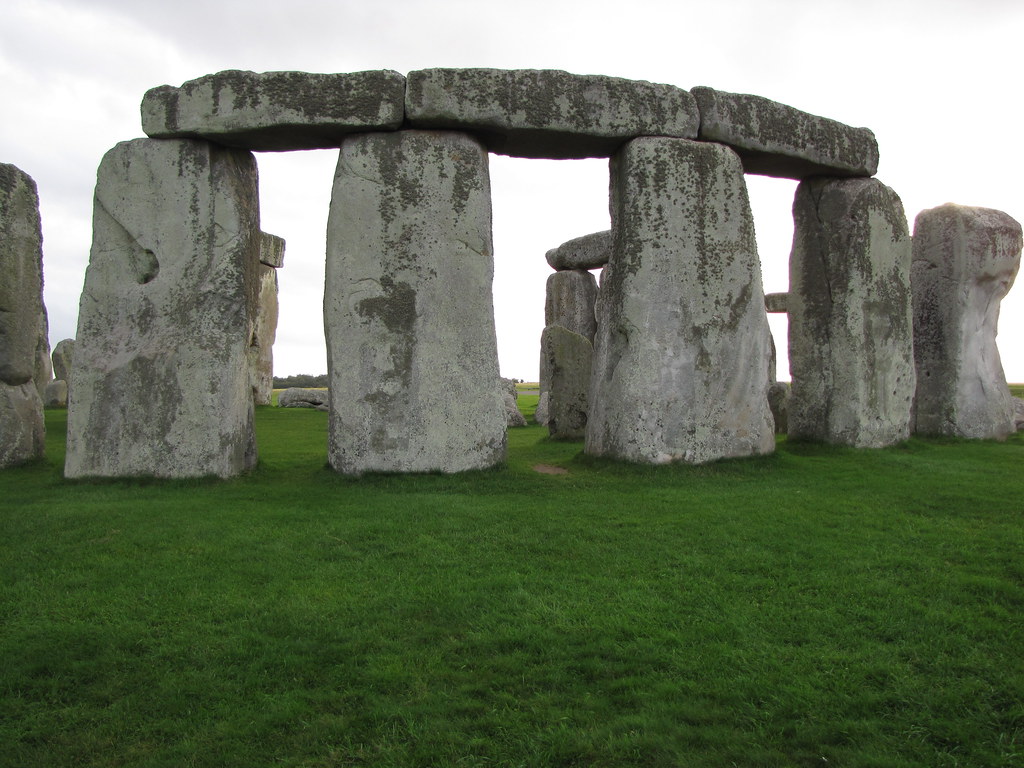
Fig. 61 (p. 166) – Stonehenge. Drawing by Marten Kuilman after: http://farm7.static.flickr.com/6209/6152832947_1b678d2802_b.jpg

Fig. 62 (p. 167) – Ring of Brodgar (Orkney). Map drawn by Charles Calder. RCAHMS, 1929. RITCHIE, Graham (1988). The Ring of Brodgar. Pp. 337 – 350 in: RUGGLES, C.L.N. (Ed.) (1988). Records in Stone. Papers in Me-mory of Alexander Thom. Cambridge University Press, Cambrid-ge. ISBN 0 521 33381 4

Fig. 64 (p. 173) – The search for traces of the Deluge. BETTEX, Albert (1977). De ontdekking van de natuur (Die Entdeckung der Natur; Droemersche Verlagsanstalt Th. Knaur Nachf. München/Zürich). W. Gaade BV, Amerongen/Uitgeverij Septuaginta, Hoofddorp/ICOB CV, Hoofddorp. ISBN 90 6113 028 X

Fig. 67 (p. 190) – Some examples of Trilobites from various ages. CLARKSON, E.N.K. (1979). Invertebrate Palaeontology and Evolution. George Allen & Unwin, London. ISBN 0-04-560007-4

Fig. 70 (p. 196) – Various Ammonites (Snakestones) from Robert Hooke’s book ‘Discourse on Earthquakes’ (1703). In: DOTT, Robert H. & BATTEN, Roger L. (1971). Evolution of the Earth. McGraw-Hill Book Comp., New York. ISBN 0-7-017619-1

Fig. 72 (p. 201) – Ammonites of the Lias (Lower Jurrassic). Cephalopods: 1. Arietites bucklandi, SOW. 2. Echioceras raricos-tatum, ZIET. 3. Uptonia jamesoni, SOW. 4. Aegoceras (Andro-gynoceras) capricornu, SCHLOTH. 5. Amaltheus margaritatus, MONTF. 6. Dumortieria radians, REIN. Tafel 31, p. 197 in: BRINKMANN, Roland (1966). Abriss der Geologie. Begründet durch Emanuel Kayser. Zweiter Band. Historische Geologie. Ferdinand Enke Verlag, Stuttgart.

Fig. 73 (p. 202) – The number of Ammonoid families is calculated from information in: MOORE, Raymond C. (1959/1997). Treatise on Invertebrate Paleontology. Part L. Geological Society of America and University of Kansas Press. The graphic representation is given in fig. 8.25, p. 180 of: CLARKSON, E.N.K. (1979). Invertebrate Palaeontolgy and Evolution. George Allen & Unwin Ltd., London. ISBN 0-04-560007-4

Fig. 74 (p. 204) – The first signs of life. Grypania spiralis. KAUFFMAN, Stuart (1995). At Home in the Universe. The Search for Laws of Self-Organisation and Complexity. Viking/Penguin Group, London, ISBN 0-670-84735-6

Fig. 77 (p. 214) – The Ruff or Machetes pugnax. P. 553, fig. 37 in: DARWIN, Charles (1922). The Descent of Man and Selection in Relation to Sex. John Murray, Albemarle Street, London. Original etching in: BREHMS, Alfred E. (1864/1869). Illustriertes Tierleben (English title: Brehm’s Life of Animals). Hermann Julius Meyer, Bibliographisches Institut.

Fig. 82 (p. 227) – Spiral galaxy M31, our nearest neighbour. WEINBERG, Steven (1977/1983). The First Three Minutes. A modern view of the origin of the univers. (De eerste drie minuten. Nieuwe inzichten over het ontstaan van het heelal). Basic Books, Inc., Publishers. New York/Natuur en Techniek, Maastricht/Brussel. ISBN 90-70157322

Fig. 86 (p. 235) – Zhu Shijiei triangle, depth 8, 1303. P. 137 in: STILLWELL, J. (1989). Mathematics and its History. Also in: Ancient Chinese Mathematics (1996). Rebecca Stapleton and Tommasina Tripodi (University of South Australia). http://www.roma.unisa.edu.au/07305/pascal.htm

Fig. 92 (p. 257) – Sant’Andrea in Via Flaminia in Rome. P. 418 in: BUSSAGLI, Marco (1999). Rome. Kunst & Architecture. Köne-mann Verlag, Koln. ISBN 3-8290-5202-2. Drawing by Marten Kuilman after a photo in the book.

Fig. 93 (p. 263) – Savonarola’s art of a good death. Savonarola (Hieron.). Predica dell’arte del bene morire; Firenze, 1504. In: ESSLING, Prince d’ (1909). Les Livres a figures venitiens de la fin du Xve Siecle et du Commencement du XVIe. Librairie Leo S. Olschki, Florence/Librairie Henri Leclerc, Paris.


11. About the author

Marten Kuilman (1947) studied geology at the Free University of Amsterdam. Exploration activities brought him to places like South Africa, Zimbabwe (former Rhodesia), Ireland and Australia, searching minerals like coal, tin, lead, zinc and gold. The stay in the various countries was intermitted by long car journeys, notably around the Mediterranean (1971), through the Sahara (1972) and to India (1976). The tradition of the ‘Olympic’ years continued with travels to the West Coast of America (1980), Egypt and Israel (1984), Mexico and Guatemala (1988), Indonesia (1992), Peru and Bolivia (in 1996) and Costa Rica (2000). The main reason for those excursions, and the ones which followed, was the deep-seated intention ‘to see the world’ and to put our position as a privileged observer into perspective.

MKThe study of the manifestation of the four-fold was the result of a personal journey, embarked on after the search for the material gold came to an end. ‘The Tarpeian Rock’ (1982) was the title of the first autobiographical expression. It was the traitor’s death by being flung from the Tarpeian rock in Rome that was relived in the description of a career (and its end) with a multinational oil company. The departure of the physical investigation of the earth led to transcendental horizons with unknown treasures.

The early exploratory writings resulted in an (unpublished) book titled ‘Van God Los’ (1984). The first recorded occurrence (of the term ‘quadralism’) was in a notebook called ‘Scrapnel 2’. The date was the 31st of March 1984. The word, with an exclamation mark, referred to the four aspects of nature in Joannes Scotus Eriugena’s book ‘De Divisione Naturae’ (or Periphyseon). This manuscript, written in the ninth century, is – in many aspects – still the most notable contribution to the fourfold way of thinking. It was this book, which put the author on the trail of four-fold thinking and the subsequent development of a quadralectic epistemology.

A further inquiry into thought models and the possibilities of analogy (in comparison with the Egyptian and Greek cultural history) opened up an understanding of division-thinking-in-general. The next (unpublished) book, the ‘Isagoge’ (1986), was an ‘introduction to a quadralectic philosophy’. It came closer to the meaning of quadralectics although the ‘yoke of oppositional thinking’ had not been complete been thrown off.

The concept of quadralectic thinking took shape in the next few years and resulted in a ‘Textbook on Quadralectics’ in 1990, mastering the subject on a theoretical and practical level. The seven-hundred-plus pages of the book contained the first comprehensive description of the basic principles, comparisons, applications and predictions possible in quadralectic thinking.   A computer program was written (by Cavesoft/H.D. Kuilman) to calculate the nature of any conceivable size of visibility.

The ‘Textbook’ was immediately after its completion reworked. Firstly, in a more sizeable form in the ‘The Keyhole of the Pantheon’ (1990) and secondly in an extended form (but with the majority of the speculative items left out) in ‘The Gardens of Epicurus’ (1991). Further extensive research on the expressions of the four-division resulted in another large work, called ‘Four. The Rediscovery of the Tetragonus Mundus’ (1995/1996). None of these books have been published so far.

The present book combines the theoretical aspects of a quadralectic approach with its (speculative) consequences. The implementation in a historical context leads to new vistas, which have never been seen before.

       Heemstede, 26-10-2011